

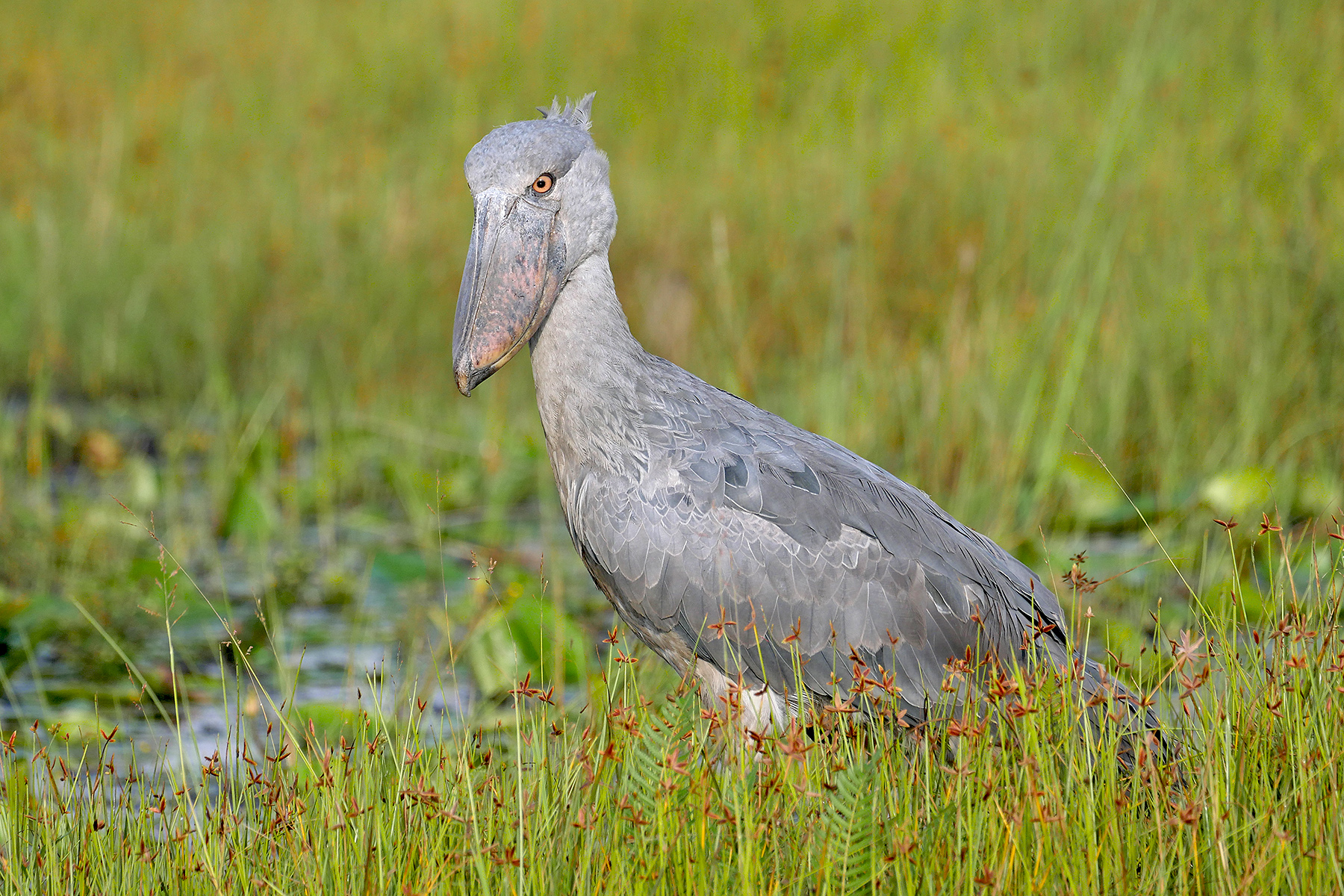
The Shoebill is one of the most fascinating and mysterious birds on Earth. Known for its large size, powerful presence, and unique shoe-shaped bill, this rare bird lives in the swamps and wetlands of central tropical Africa. Because of its strange appearance and quiet hunting style, the shoebill often captures the curiosity of scientists, photographers, and nature lovers around the world.
Appearance and Physical Features
The shoebill is a tall bird that can reach about 1.2 meters (4 feet) in height, with a wingspan of over 2 meters (about 7 feet). Its most striking feature is its enormous bill, which looks like a wooden shoe—this is how the bird got its name. The bill is strong and sharp, allowing the shoebill to catch and crush large prey. Its feathers are usually bluish-gray, and it has long legs that help it move slowly through shallow water. The shoebill’s eyes are large and forward-facing, giving it excellent vision when hunting.
Habitat and Distribution
Shoebills are mainly found in the large wetlands and marshes of countries such as Uganda, South Sudan, Zambia, and the Democratic Republic of the Congo. They prefer areas with thick vegetation, papyrus swamps, and slow-moving water. These environments provide both shelter and a rich supply of food.
Diet and Hunting Behavior
The shoebill is a patient and skilled hunter. It often stands perfectly still for long periods, waiting for the right moment to strike. Its diet mainly includes fish, especially the Lungfish. However, it may also eat frogs, snakes, turtles, and even small crocodiles. When prey comes close, the shoebill suddenly lunges forward and grabs it with its powerful bill.
Behavior and Reproduction
Shoebills are usually solitary birds, meaning they prefer to live alone rather than in groups. During the breeding season, they build large nests made of vegetation on floating islands or solid ground within swamps. The female usually lays one to three eggs. Interestingly, if food is scarce, often only one chick survives, as the stronger chick receives most of the food from the parents.
Conservation Status
Today, the shoebill is considered a vulnerable species. Wetland destruction, human disturbance, and illegal wildlife trade threaten its population. Conservation organizations and local governments are working to protect wetlands and ensure that these unique birds can survive in the wild.
Conclusion
The shoebill is truly one of nature’s most extraordinary birds. With its prehistoric appearance, quiet hunting style, and rare habitat, it stands out as a remarkable species. Protecting the shoebill and its wetlands is important not only for the bird itself but also for the rich ecosystems where it lives. By learning more about this incredible bird, people around the world can better appreciate the beauty and diversity of wildlife.
